

Water is the Aetheric Element! Light and Water are both irreducible and inversions of each other!
And Hydrogen should be called Pyrogen instead! The World Ash Tree: Yggdrasil, fitting Runes & more about Hel- the Norse Goddess of Death & the Aetheric Otherworld- not fiery, but a water-world!

All my work is handwritten!
The following article is the official sequel to:

I identify Light as the Inversion of Water (the Wisdom of Water is an aspect of Sophia), the complementary Aetheric Medium for Light!
Anima brings life to Nature, Animus is the Light and Water is the aetheric medium. Where Light and Water fuse, there are liquid crystalline bodies, the EZ water zone- that is the child of the masculine (centrifugal Φ) and feminine (centripetal Ψ) principle.
Hydrogen’s name is a deception, it has been called “inflammable air” and hence rather Pyrogen- which is the most basic element in the realm of the bringer of light and all other elements are based on Pyrogen (“Hydrogen”)- like motions through physical music, through the major (light) and minor (water) keys & octaves...1
Greetings wondrous biped!
Today’s release is a very special edition. As I have pointed out in a former article, identifying water as irreducible fits perfectly well, also to the philosophy of Thales (who saw water as archaic and that everything has a soul) - and he walks this crystalline bridge of clarity towards our era, where Dr. Gerald Pollack helped us to see that it is Light that charges and structures Water and hence, that charge separation and the animation of Gaia, does in fact come from irreducible Water, charged by Light! Chemistry has driven us into falsified complication!
The realisation that water is not H₂O is groundbreaking, because it confirms the idea about the complementary duality between Reality and Aether.
Water has been deeply connected to the Journey to the Beyond and to the feminine Aether, that has never been seen as the true complementary to Reality…
Water is irreducible (incommensurable2, in the Pythagorean sense).

Water is the Aetheric Element!
Irreducible Water is the Inverse-Mirror (Conjugate3) of Light!
Walter Russel’s perspective is incomplete, since water is not made of hydrogen and oxygen (they are present at a certain ratio though). Instead, water is irreducible and the medium for the propagation of Light in the Aether (in different phases than here in Reality).
Water and Light are both fundamental. All matter comes from light and without Water there would be no Charge or Medium for the Liquid Crystalline Structuring of our World, the Anima-tion of Nature!
Hydrogen (Pyrogen!) as the omnipresent, charged and simplex light-derived inducer that is conjugated reciprocally with and charges archaic/ irreducible water!
Matter = High Energy Light! (the centripetal part of the vortex of light).
Matter/ hydrogen emerges when high-energy light reaches a dielectric threshold/ capacitance overload (forming circular harmonics, according to Ken Wheeler), stopping propagation and condensing into inertial form (“protons” are dielectric dynamos… gyroscopic weight on the dielectric).
Pollack’s solids are the dielectric catalysts for water… they are field polarisers. (this means water loving surfaces cause real charge separation, which animates nature into life).
Ritter carried out various experiments in support of his idea that electrolysis was not decomposition at all, but a pair of synthetic reactions: negative electricity comes in at one end and combines with water, and the product of that combination is hydrogen; likewise, positive electricity combines with water at the other end, and makes oxygen. According to Ritter, water was an element after all, and hydrogen and oxygen were water-based compounds.
“You don’t have a soul. You are a soul. You have a body.”
— C.S. LEWIS
Light is the Inversion of Water, both looking at Reality and the entire Stereoma (Reality & Aether). Therefore, Hydrogen (that is rather Pyrogen), is the most simple matter from light, while Water is just the Medium for Propagation, charging and structuring into the vortices of life!

If Water can be broken down into oxygen and hydrogen (gas), why is it so hard to breathe underwater? Fish do not take oxygen from water splitting neither, they take it from the ocean, that stores it, when all the plankton purified it from co2.
“So we must look for something which can form compounds with iron. I told you recently that soda is especially important for everything in us that has to do with thinking. For soda is sodium carbonate and sodium carbonate has a stimulating effect upon the head. Everything that is connected with our thinking, with our head, with our inner light, has to do with soda. You will remember that I recently explained this. In order that a substance like soda may be present in us, we must take in the oxygen contained in the air.” Rudolf Steiner
Walter Russell, a polymath philosopher and self-taught scientist, viewed the chemical elements not as separate, isolated building blocks of matter (as in the conventional periodic table), but as dynamic conditions of motion within a unified, rhythmic, electric universe. He described all matter as compressed or expanded light, arising from thinking Mind (the One Universal Substance or God), and expressed through waves of light that follow musical and harmonic principles.

It is great to identify light behind all matter, but light, through hydrogen- has falsely been identified as the basis of all matter, since it is rather pyrogen and water is the conjugated and irreducible medium, the complementary to it / to light, the inversion! This only works when we integrate the Aether, the realm beyond the center of everything.
One cannot be without the other (there is always an aspect of the one in the other)!
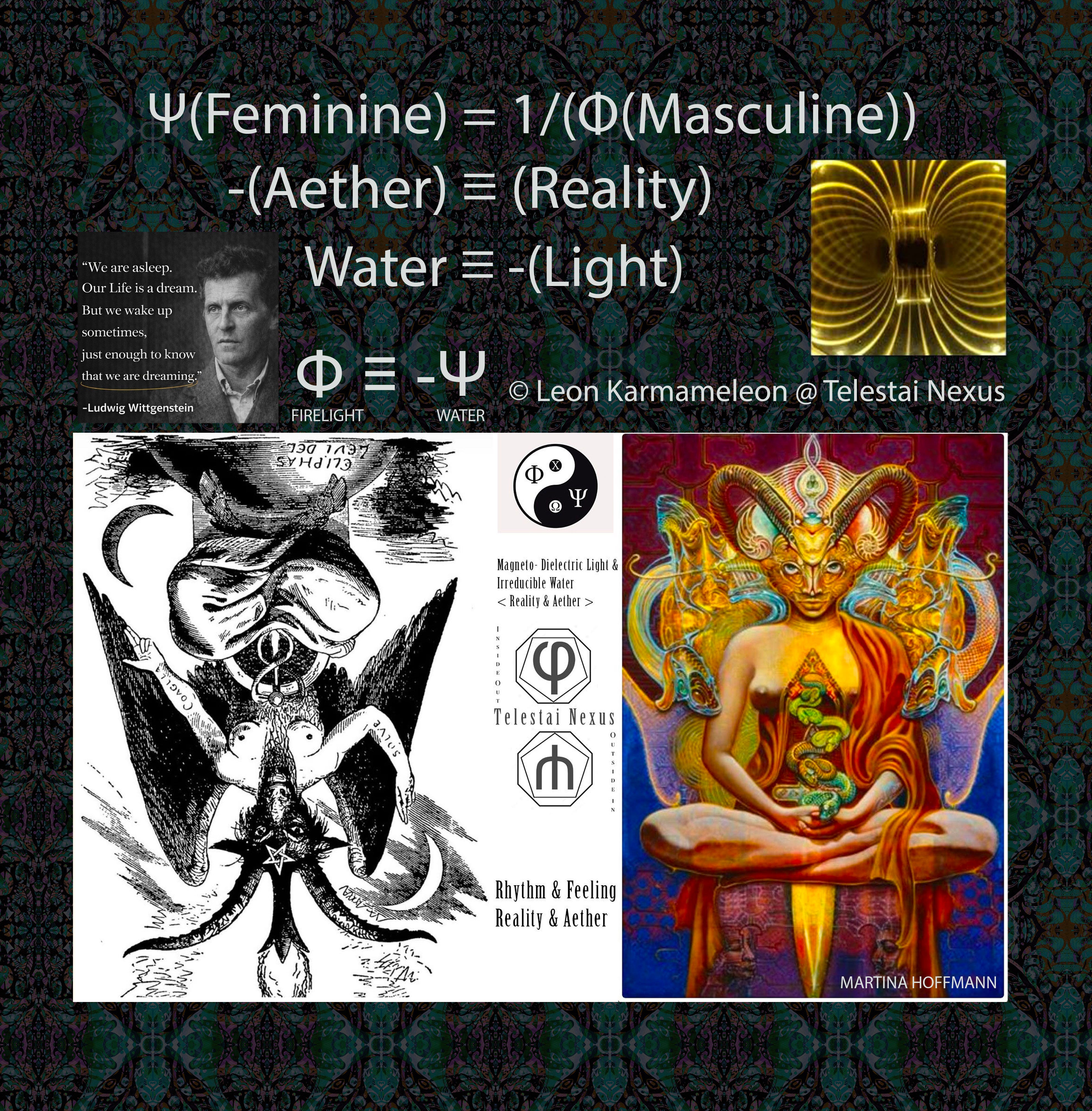
Lucifer, the Bringer of Light, is the Inversion of Sophia, the Goddess of Wisdom (The Masculine is the Inversion of the Feminine).
Reality :: Masculine ::: Light (left) and Aether ::: Feminine ::: Water (right) Painting on the right by Martina Hoffmann, please support her incredible work. She depicts the Otherworld in awe inspiring precision and depth: [344]

There are endless cycles of birth and death- growth followed by decay, and generation (charging of the aetheric water, through light) followed by radiation- each expressed simultaneously and repeated sequentially forever without end, without ever returning to the same place exactly the same way.
Decay relieves the tensions created by compression (charging, torque, vortex motion); without it, matter could not fulfil it’s conjugation within the Aether- where the decay is actually a condensation, since the zero point is also the lens of inversion (as I have pointed out throughout my recent work).
All “dead” or decaying matter (fallen leaves, rusting iron, exploding stars) is simply matter exhaling- returning to the Aether, where condensation happens at the same time. Both sides are on the same vortex, the magneto- dielectric dual torus fountain returns through the zero point in the center.

Elements are states of motion, not fixed things!
They are different pressure conditions of the vortices of light. All elements are fundamentally vortices, but conditioned differently by electric pressures during their spiral journey.
Russell sees the elements in nine octaves (sometimes depicted as ten, including a tentative one), like musical octaves.
Each octave represents a complete cycle of generation (compression / inbreathing, building matter, centripetal) and radiation (expansion/ outbreathing, decaying matter4, centrifugal).
I identify water as the aetheric element, the medium for the propagation of that light, the inverse mirror of light!
Wisdom is the opposite of dilution, it is the concentration, the condensation!:::
Desire is the presence of absence
:::
Now, looking through this keyhole from the human realm, behind that door we see the world of unleashed chthonic forces5: tides of death and life clashing into each other, new forms constantly emerging and yet just as quickly falling back into atavistic states6. It is the realm of the dead just as much as of the unborn. It is the mysterious and menacing place where graves are turned into wombs, bones into seeds and death into renewal.
This is the ‘deifying power of the underworld‘ (Stratton-Kent, Vol II, p.11) that we explore in Jake Stratton Kent’s 2nd volume of Geosophia. But let us be clear: it is deifying only for as long as the hero manages to emerge from it reborn - and avoids being swallowed and forgotten, like a pebble thrown into an ocean.
Now let’s also take a look through that keyhole the Idaian Dactyls watch over from the other end. What do we see from the side of the mountain-cave-mother when looking at the human realm? We see ourselves and the created world around us; but in a very different light. What we really see is a world that requires tearing down. A world that is taking the place of a million unborn worlds. We see beings protected by daimones that have outlived their lifetime, that have no words to speak left and yet keep on speaking. We see the chthonic forces domesticated and tamed by hybrid beings, half made from clay and half from divine sparks.
Looking from the side of the mountain-mother we see a world that has lost its purpose by falling in love with life and falling out of love with death.
The work of the goêtes7 was to stand firmly in the middle. To be present on both sides at once. Not to work on but to become the threshold. Here we discover the goês8 as the first hagazussa, the riders of the threshold, the beings that walk on the edge of the knife, cutting through death and life - in service of the great mother just as much as of creation.
Here now we encounter the essential counterbalance to the spontaneous and wild performance of the goês: There is no randomness to a rhythm and no deviation from a choreography. There is no second-thought to the flame that smelts the iron and no mercy to the hammer that hits the anvil. The work of the goês instils fear in the human heart. Because crossing the threshold between the living and the dead is not for the fainthearted. In order to emerge as a goês - marked for life and beyond - we need to face our own fears first. The living forces that carry us into and through this process are as much goêtes as the being that will emerge from it.
We essentially become one with the spirits. That is why the term goês will always remain radically ambiguous to the outsider: It signifies daemonic spirits just as much as the human they forge within their iron fires. That is also why a more liberal and yet still literal translation of the craft called goetia would be ‘humans playing with fire’.
Ironically, the one thing a being so boundlessly powerful like the consciousness of earth cannot do easily is to uphold its own boundaries. It is in its very nature to constantly expand - whether that is excessive expansion into life or into death. 'Nature abhors the vacuum', we still say today. Our goêtic ancestors might have qualified more precisely: 'Nature abhors anything constant', the absence of movement, such as a boundary it's ought to respect.
It is at level four that the Gyroscope comes into formation and is therefore a useful form for appreciating this relationship of these elements. It is within the Atmosphere that life becomes sustainable. It is also when the gyroscope become fully formed and its motion balanced that it becomes a perpetual motion device.
Since Water is not H2O and Hydrogen (super high energy light, according to Wheeler) is rather Pyrogen, for it is an explosive gas: Water is the Inverse of Light! Lucifer’s Pyrogen (“Hydro”gen) charges the aetheric Water!
Hydrogen is a dielectric-dominant (centripetal, very high energy threshold light into matter; a “capacitance dynamo”).
Light (External, Reality, Solids- which are very high frequency light) is the inversion of Water (Internal, Feelings, Aether, Gravity)
We can let go of the distinction of manifold kingdoms, when we realise that light and water are fundamental. The radiative and centrifugal aspect is Light φ (the Inducer, external) and the centripetal charging aspect is Water ψ (the Medium, internal).
We can speak about our outer Light and inner Water, when we address our relationship with Reality and the Aether, the External and the Internal World, until the inverse mirror flips.
This dyad has not been recognised clearly and the findings of Dr. Gerald Pollack, Dr. Paul LaViolette, Dr. Michael Levin, Ken Wheeler (the magneto dielectric field under the Ferrocell)- help to integrate this once and for all: Both Light and Water are fundamental and one is the Yin with an aspect of Yang and the other the Yang with an aspect of Ying, meaning that the magneto- dielectric light has a centrifugal (magneto) and centripetal (dielectric) part.
Water is both expansive (centrifugal) and contractive (centripetal) too- while it is the aetheric element and direct conjugate of Light, it is also expanding into vapor(isation) and becoming diffuse, outward-reaching while it also contracts into structure and even solid ice by cooling, becoming dense and inward-bound. Aristotle inferred that Thales saw this versatility as why water could generate all things- nourishing (centripetal matter formation, high frequency light) yet dissolving (expansive, centrifugal, the inversion of the defining Nature of Light).
This completes both the Yin (Aether) with an aspect of Yang (Light) and the Yang (Reality) with an aspect of Yin (Water).
Light = Magneto- Dielectric Vortices
Water = The Inversion of the Magneto- Dielectric Vortices of Light (the zero point is the lens of inversion towards the Aether).
Visible light is only a very small aspect of Light, which can also be matter or invisible like infrared, which returns to charge the aetheric Water, which is irreducible.
Inuit Mythology
Sedna, known by various regional names such as Nuliajuk, Takannaaluk, Sanna, Nerrivik, Arnakuagsak, Arnaqquassaaq, Sassuma Arnaa (”Mother of the Deep”), Arnapkapfaaluk (”Big Bad Woman”), or simply “Old-woman-who-lived-in-the-sea,” is a central figure in Inuit mythology. She is revered as the primary goddess of the sea, marine animals, and the underwater realm. Her myth serves as a creation story explaining the origins of sea creatures and underscores the Inuit people’s deep reliance on the ocean for survival. As the ruler of Adlivun- the Inuit underworld, often depicted as an inverted or upside-down watery netherworld beneath the sea (not as an actual up side down life but as the inversion of the Forces, the World in its experiential composition)- Sedna controls the availability of seals, walruses, whales, fish, and other marine life to hunters. She is both a nurturing mother figure, providing sustenance, and a vengeful deity whose anger can lead to famine if taboos are broken or if she is displeased.
In summary, Sedna’s myth is a profound narrative of origin, power, and reverence, integral to Inuit worldview. Sedna is the Goddess of the Sea... She ruled Adlivun, the Inuit Underworld....
Everything is Conscious (Dr. Michael Levin).
Water and Light : the Aeons
1640s, from Late Latin aeon, from Greek aiōn “age, vital force; a period of existence, a lifetime, a generation; a long space of time,” in plural, “eternity,” from PIE root *aiw- “vital force, life, long life, eternity.” Related: Eonian; eonic.
Time is simply the motion, the spin of the vortices that are the basis of Light & Water.
aerial - this word means in the air, it also has the “ae” mirror- like aether and earth.
A cosmic process, emanation, or generating power- aware, animated, and animating.
Caveat: the following perspective is an integration of all novel findings and based on my personal cosmology. I do not claim this to be anything more than my personal opinion and I hope that you make your own research and then you can see that I simply apply the logic of Yin and Yang here, but without making the categorical mistake of seeing the “Shadow” as the Complementary other, when it is, in fact- just the absence of Light.
There is no “Cosmic Error” in the Kenoma (no demiurge rule) is simply the Inverse Mirror of the Pleroma, beyond the Zero Point in the Center (not a faulty realm at all).
The PLEROMA (Aether) is the Inversion of the KENOMA (Reality).
The Archons are not in Control of the World of Light, this is the Realm of Lucifer, the bringer of Light and cohort of Sophia, the Goddess of Wisdom!
This settles a millennia old debate. Evidence comes from Aether Physics and the Ferrocell findings from Ken Wheeler.
Reality is not the Realm of any demiurge, it is our splendid world of light- and without the aetheric water as the medium that light could not propagate, which is also our matter. Before Dr. Gerald Pollack found that water structures and charges light (real charge separation through the EZ water zone), the Aether has been seen as the Ground and Charge as primal. Now we can see that Light charges and structures aetheric Water. Mutual sustenance and amplification, syzygy:
Aeons originate in the PLEROMA & KENOMA - the Pleroma is in the Center of the Galaxy but also in the Center of every cell and beyond the center of every “nucleus”, that is just a portal beyond this World into the Aether9. Aeons are streaming currents of living luminosity or Organic Light, because they are the medium (Water charge to feel) and the inducer (Light to refract beauty). These beings came in galactic superwaves or other ways and brought life. They are conscious like everything else in existence (Michael Levin’s words).
The Kenoma is nothing negative or “shadowy” (seeing the Kenoma as a shadow-realm or the realm of the demiurge is a categorical error, since it is the inversion of the Pleroma), but the Yang to the Yin of the Aether that is the Pleroma. Only when one understands the principle of inversion, the hidden conjugation between Reality and Aether, can we avoid this categorical error, namely to see the KENOMA as flawed and shadowy, when the shadow is just the absence of light and the true complementary to the Light of Reality is Water, the Aether.


Norse Cosmology
The Origin of “Hell”: Hel
Hel (Old Norse: Hel) is a prominent figure in Norse mythology, serving as both a goddess and the personification of the underworld realm she rules, also called Hel or Helheim. She is depicted as the ruler of the dead who do not die in battle, overseeing a vast, neutral afterlife domain where souls continue aspects of earthly existence. Unlike the Christian concept of Hell, Hel’s realm is not inherently punitive but a place of concealment and rest for the majority of the deceased. Hel embodies themes of death, concealment, and balance in the Norse cosmos, often portrayed with a dual nature reflecting life and decay.
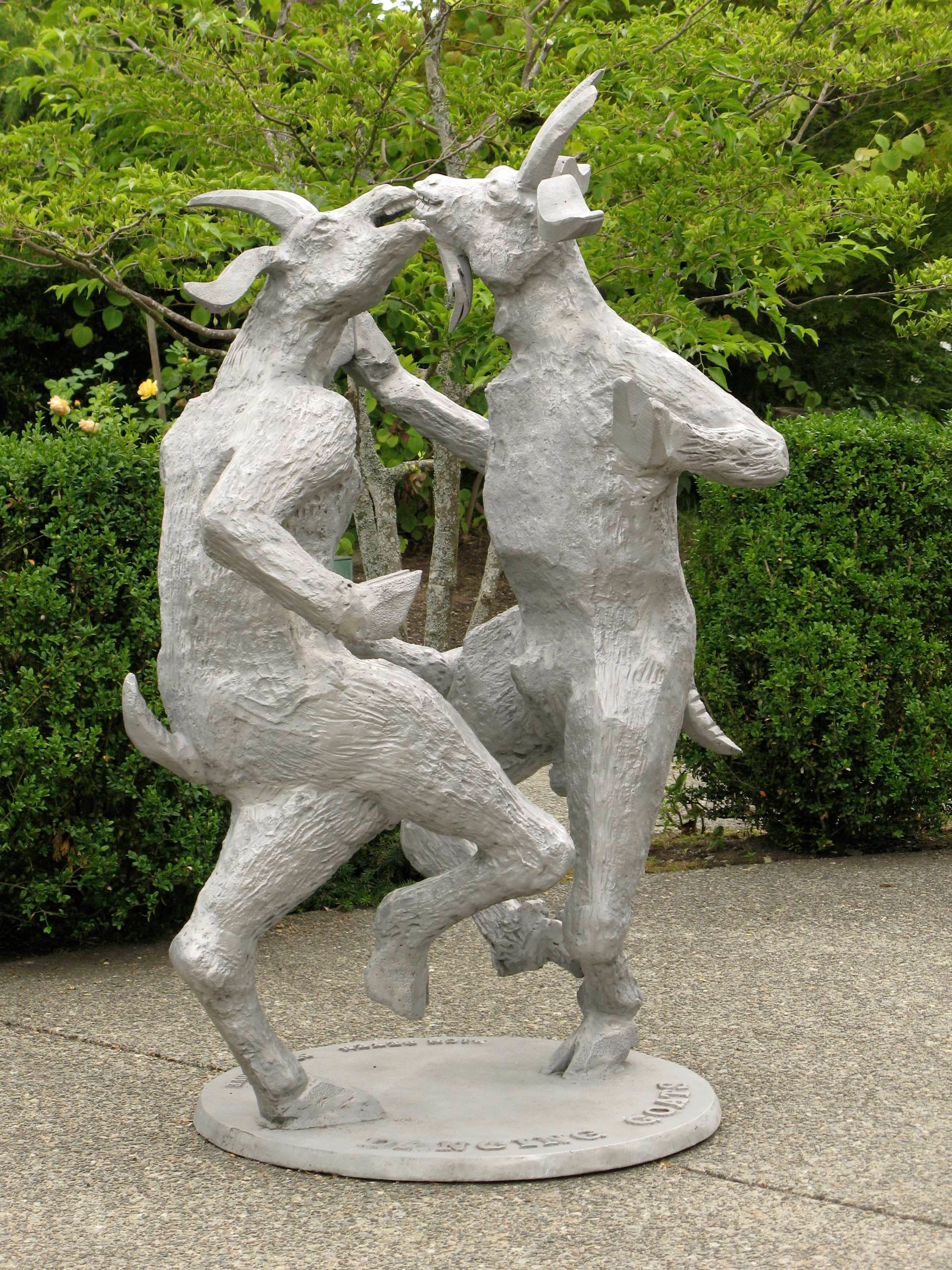
“Going to Hel” → Hel (to her)
Hel is the Norse goddess of death. She rules over Niflheim, also known as the World of Mist, or Hel. It’s the place where the gentle dead go - those who have not died in battle.
Hel, or Lady Death, appears as a half-rotted young woman, with flesh on one side of her face and body and nothing but bones on the other side. Her visage may scare some people, but I believe it’s a sign of her being in two worlds (or of two worlds). Some people say her lessons can be harsh, but I haven’t experienced that. She can be a very loving, gentle, and maternal goddess. She is sometimes associated with ravens/crows, but this might be more of a newer gnosis about her.
Hela is a loving Goddess. She sees all of you and loves it all — the darkness and the light. She doesn’t desire power. She has everything she wants. She’s simply there, graceful and peaceful.
“[Hela is] about pushing souls to evolution.” (Wholly, a Devotional to Hela).
Santa Muerte, also known as Our Lady of Holy Death, is a goddess from the Southwestern United States and Mexico whose worship has spread like wildfire. Her worship has increased drastically in the past decades, claiming worshippers all over the world. She is usually depicted as the personification of death, as a skeleton draped in a cloak with a hood. Santa Muerte sometimes holds a scythe and/or a globe.
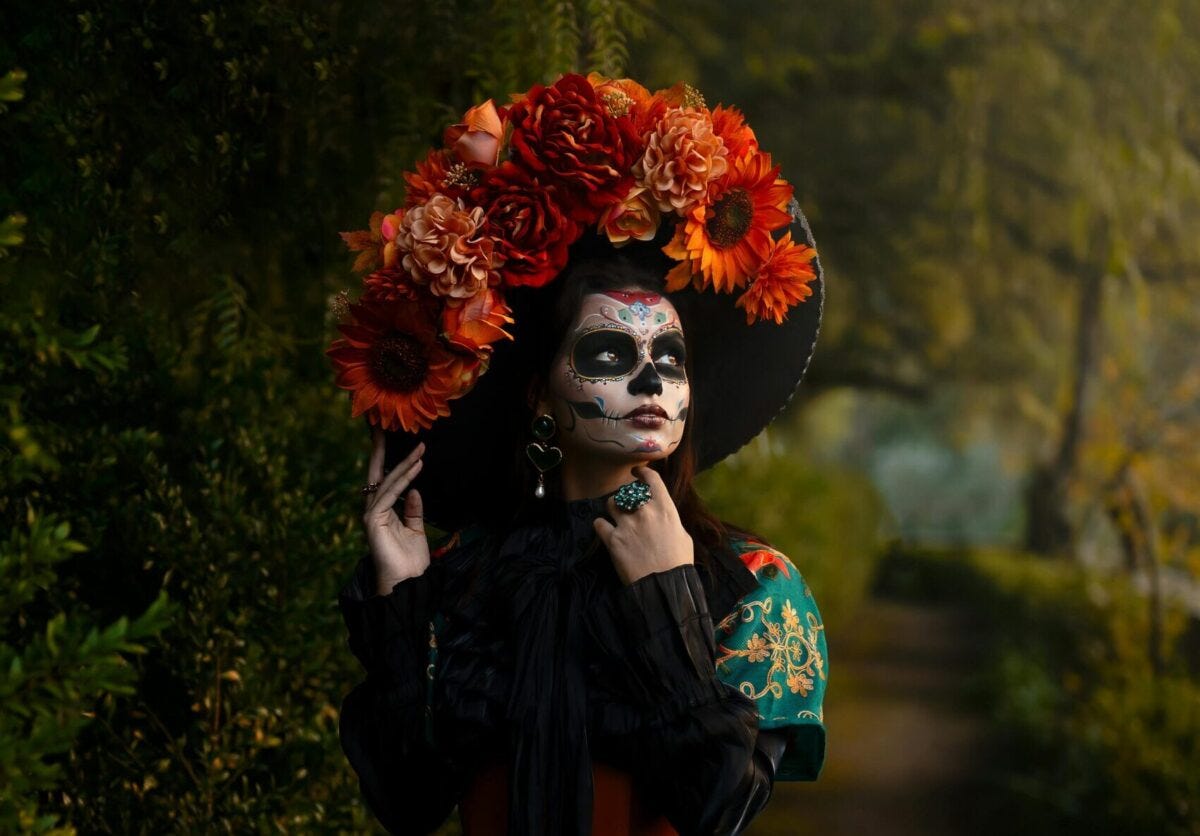
Mictecacihuatl, Lady Death
Santa Muerte’s origins may lie with the Aztec goddess Mictecacihuatl, known as Lady Death. She appears as a skeleton as well and ruled over the otherworld with her husband, Mictlantecuhtli. She presides over festivals for the beloved dead, which are thought to be the origin of the Day of the Dead celebrations. Her role in the underworld is to guard the bones of the deceased.
Anglo-Saxon Runes (5th century C.E.):
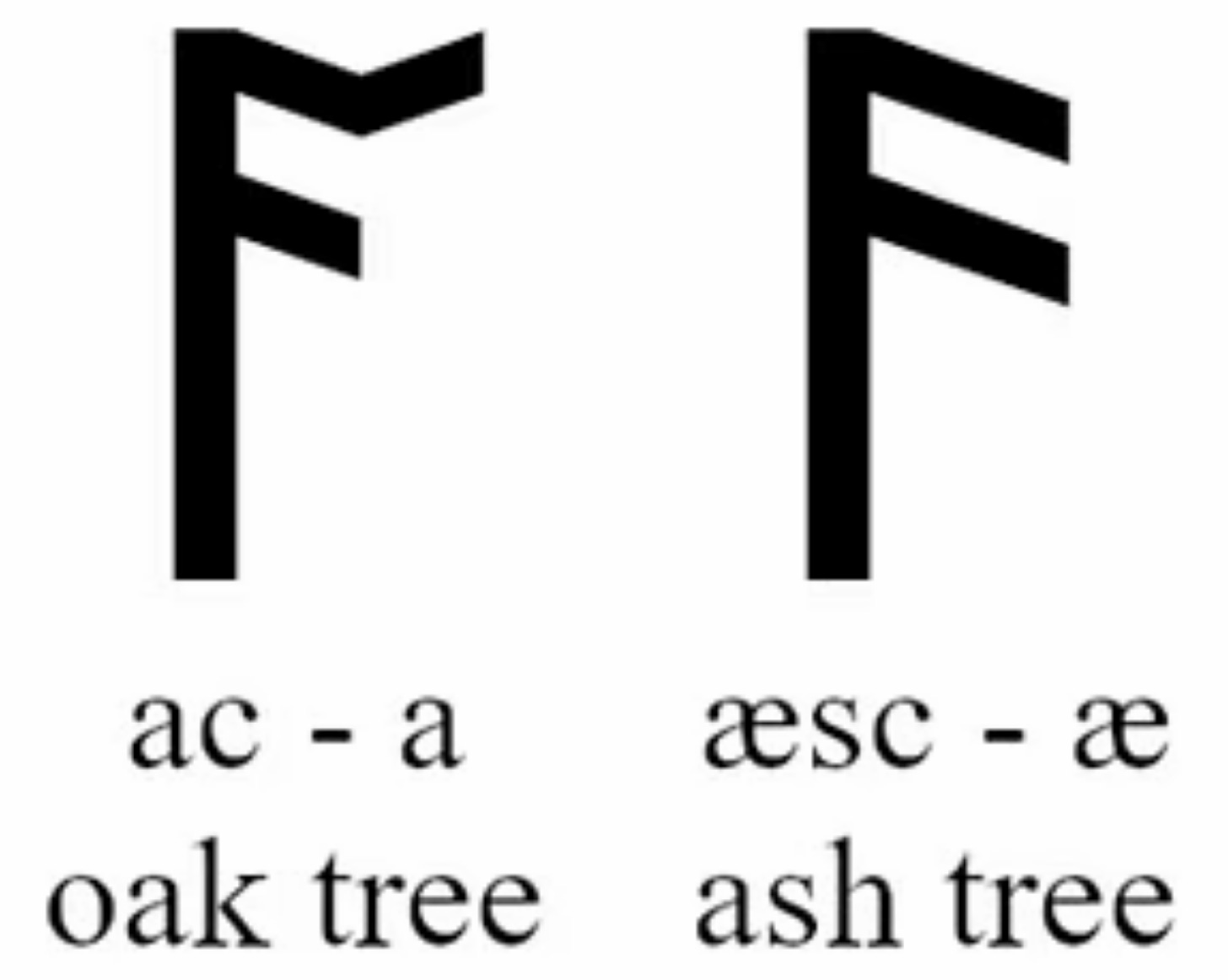
Æsc with protective qualities → the Ash tree stands for the interconnection between the realms (it is the shamanic axis).
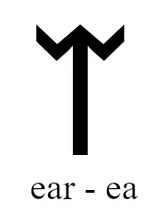
Ear: Finality and earth-return, sometimes tied to ancestral cycles rather than just doom / death as rebirth portal. Death and dissolution, but part of transformative cycle- ending that clears way for renewal. Alchemical change.
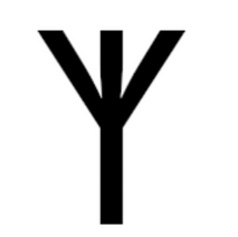
Algiz / Eolh : Edred Thorsson, Runologist and Odinist, interprets Algiz/ eolh as protection, divine connection (elk antlers as link to gods), and shamanic axis (Yggdrasil-like). In Anglo-Saxon context, he ties it to warding against harm, resilience, and spiritual defense.
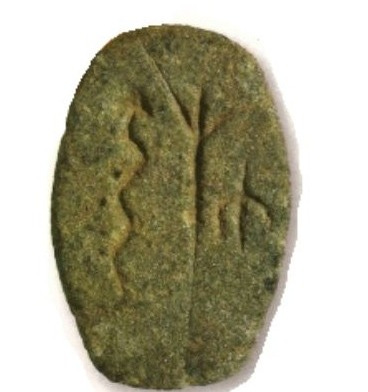
The snake, PSI type of upright symbol (like the figurenes) and its inversion! A very ancient find and one of the oldest symbols known to man, together with the snake! From Göbekli Tepe, estimated to be inhabited from 9000-8000 BC up to 2500 BC.
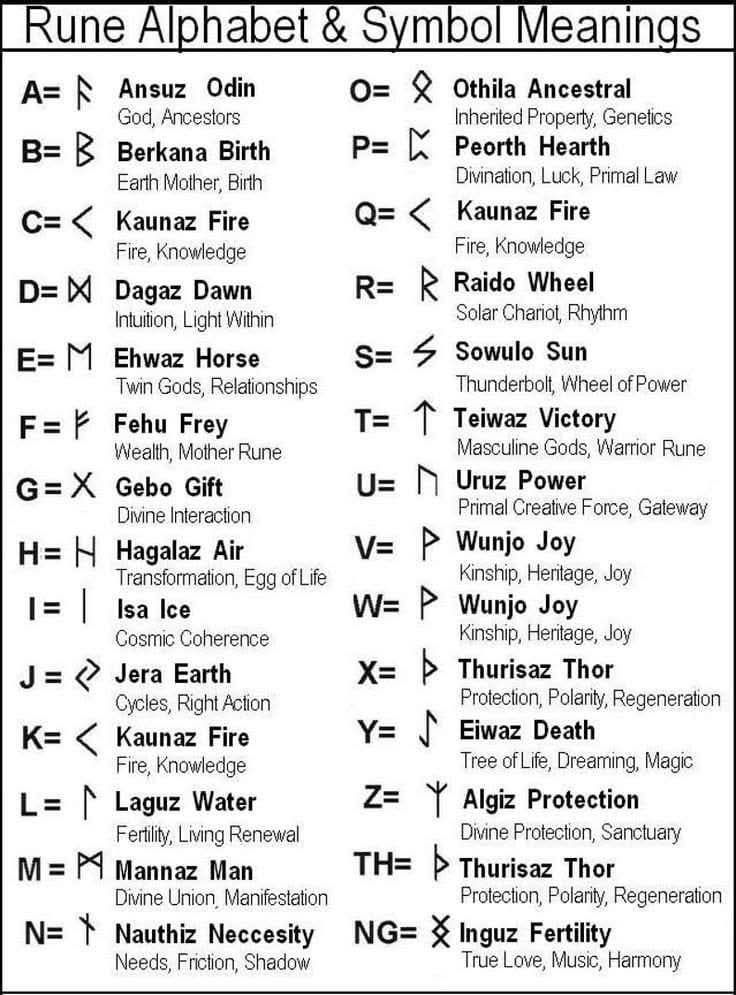
The World Ash Tree (Yggdrasil):
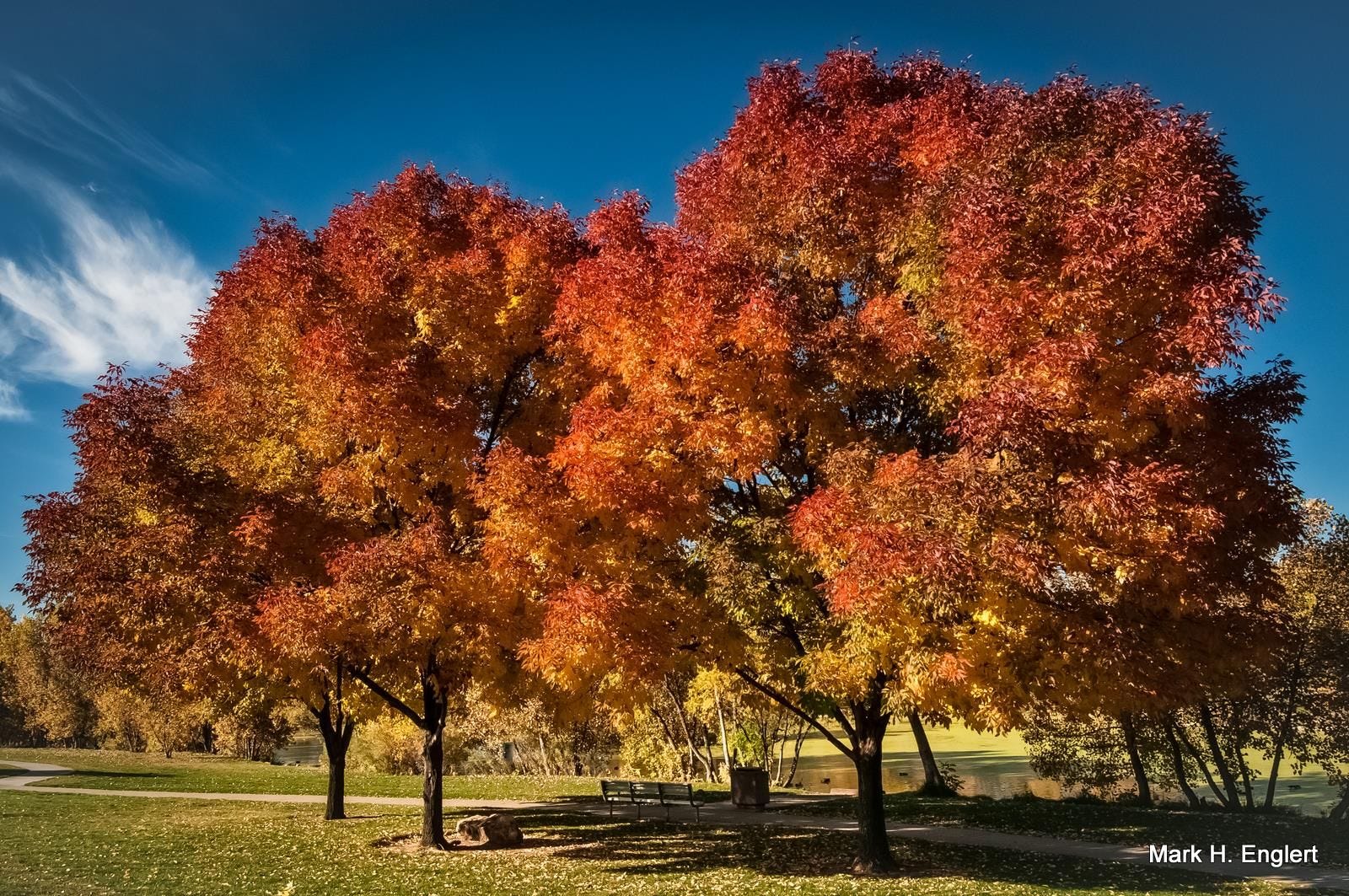
In Norse mythology (the primary source for much of Germanic lore on this topic), Yggdrasil is the immense cosmic tree that functions as the axis mundi- the central pillar or world axis upholding and connecting the entire universe. It is explicitly described as an ash tree), where it’s called “the greatest of all trees,” with limbs spreading over the world and extending above the heavens.
The Æ Ligature: The symbol æ (called ash) originates from Latin and Old English, representing a vowel sound between ‘a’ and ‘e’ (like in cat or bet). It’s used in words borrowed from Latin or Greek, and in Germanic languages like Old Norse.
Æsir (plural; singular: Áss) is always transliterated with æ in modern English representations of Old Norse, reflecting its Proto-Germanic root ansuz (”god” or “life force”). This spelling emphasizes the divine, heavenly nature of the gods.
en.wikipedia.org
Aether (Æther) is an alternative, archaic spelling of ether, derived from Greek αἰθήρ (aithḗr, meaning “upper air” or “pure sky”). In English, it’s sometimes written as “æther” to preserve the classical Latin form (aethēr), especially in scientific, philosophical, or esoteric contexts. This spelling fell out of common use after the 19th century but persists in specialized texts, like physics discussions of the luminiferous aether (the water medium for light).
The connection between the sky and the Aether is very interesting here, because the aetheric is the inversion beyond the zero point in the middle of everything- therefore I consider the sky rather the realm for our “astral” body, the worldly aspect of our soul, the astral body.
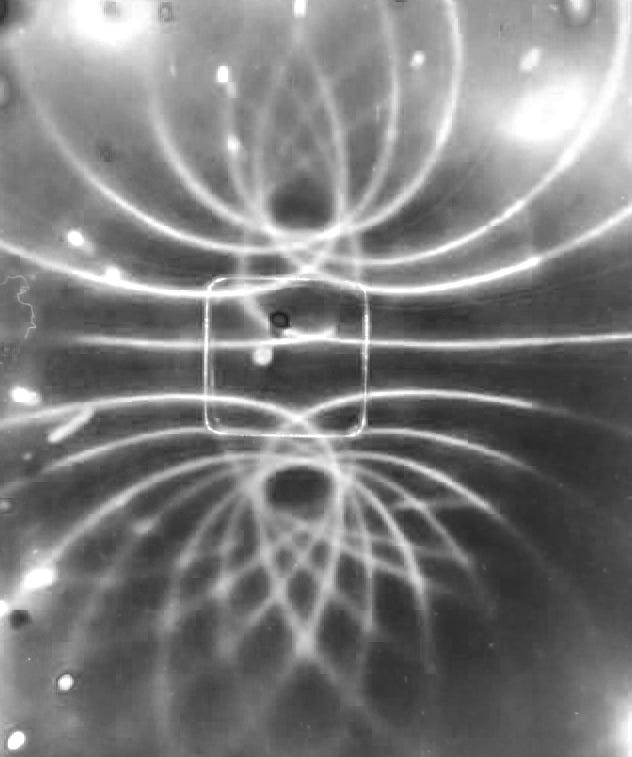
The Aether harbour our aetheric body, just as Rudolf Steiner identified it. The results from the Ferrocell findings of Ken Wheeler clearly show an acceleration of the dielectric from the magnetic torus of everything in existence, always towards the zero point in the center. This fact has been erased from the torus depictions you commonly find online- where the illusion of a circulation between south towards the north “pole” is suggested, when it is in fact all coming from and returning to- the zero point in the center of everything.
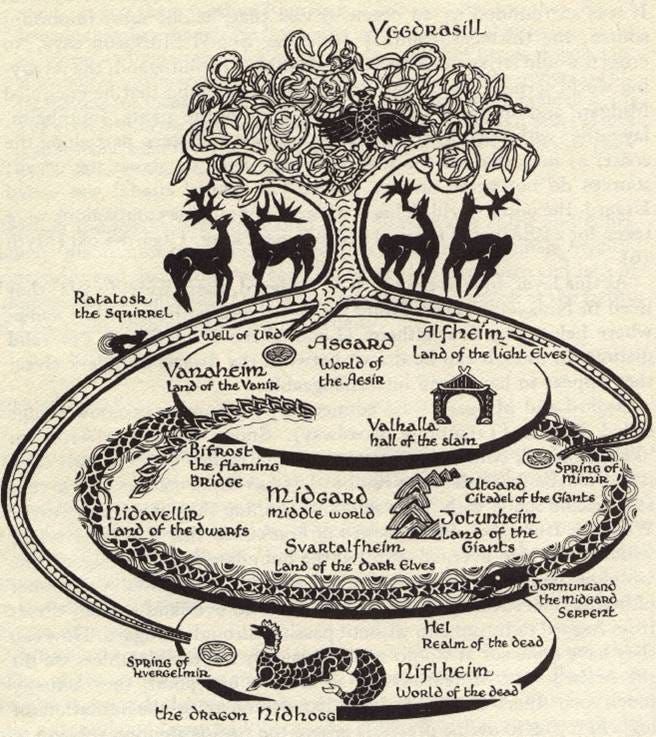
In Norse mythology there are Nine Realms, or worlds. There might actually just be eight, but I will get back to that. Two of these primordial realms existed before there were gods. It is said that all beings emerged from the coming together of these two worlds.
Having come into being, Odin, the Allfather, together with his brothers Vili and Ve, fashioned the remaining seven realms from the body of the first primordial being, the first frost giant named Ymir.
The two primordial realms are named Niflheim and Muspelheim, the realms of ice and fire. Between these two worlds was the great void of Ginnungagap, ‘the gaping abyss’, and the world tree Yggdrasil, also from a time before the gods.
The mutual interaction between Niflheim and Muspelheim, Water and Firelight, is the basis in Norse Mythology too!
Niflheim – A place of frost, ice, snow, and mist. The spring Hvergelmer, which gives rise to the rivers Elivagar and Gjoll, is located here.
Muspelheim – A place of fire and home to the fire giants. Surt, who will one day set fire to the world tree, dwells here.
Asgard – Home of the Aesir tribe of gods and source of the Bifrost rainbow bridge. (the EZ Water fusion zone, our Sacral Chacra, the central plane of our body, where life happens, the dielectric inertial plane at every scale…)
Vanaheim – Home of the Vanir tribe of gods
Alfheim – Home of the bright elves
Jotunheim – Home of the frost giants
Midgard – Home to mortal humans, positioned between Jotunheim and Asgard.
Nidavellir – Home of dwarves and Svartalfheim – home of the dark elves, lie beneath the surface of Midgard.
Hel – Home to Hel and her familiars. The final abode of all the dead, save for those chosen to sit in Odin’s hall of Valhalla and Freya’s bright hall of Folkvangr.
Asgard (Old Norse: Ásgarðr; “Enclosure of the Æsir “ASGARD → Aether. (The Association is always with the Sky or the Water, regardless of the Culture. I think that the worlds below and above are the same (since the shadow is also just an absence of light and not complementary to light, likewise Asgard and Hel are both parts of the Aether!
»Short Introductory Video about Norse Paganism«
The dielectric inertial plane is flat, Earth is round!
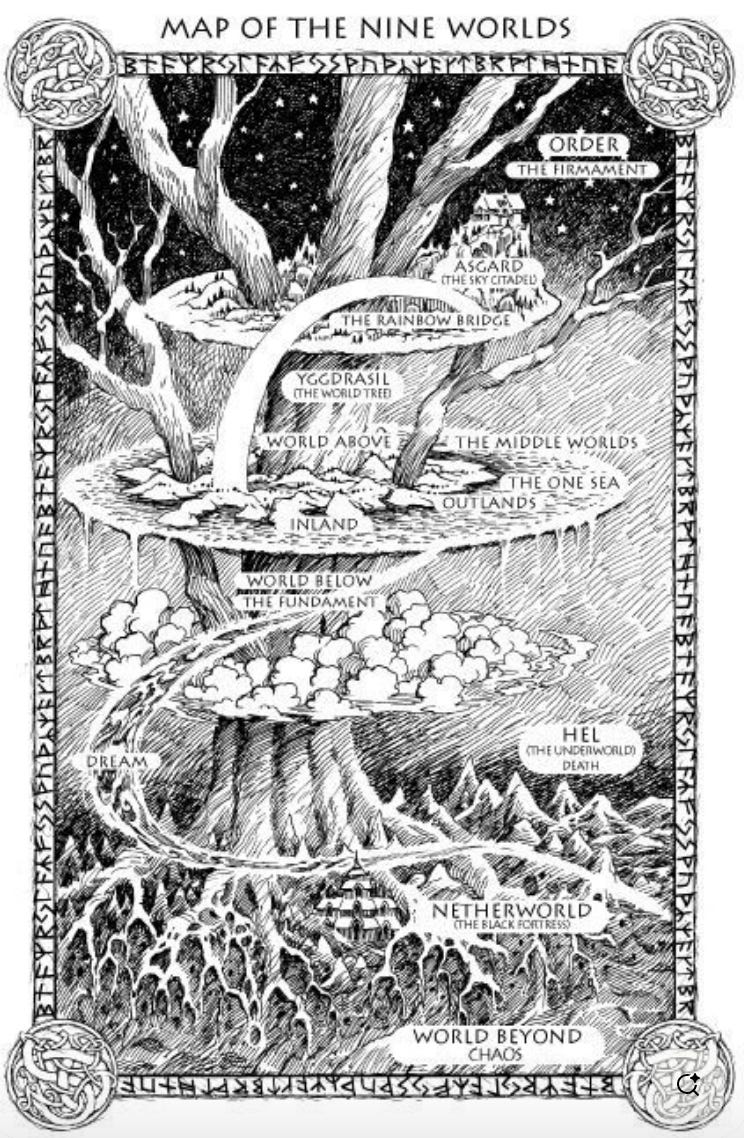
As you can see, in norse mythology, the bloch-wall, or inertial plane- has been mistaken for the limits of our World, of Earth, which makes sense intuitively but our world is anthropomorphic yet spherical and the torus reaches below and above and through the dielectric return beyond the zero point, where the second snake appears (the Aether) . It might very well be that the ancients have seen it correctly, that they have identified the inertial plane of our galaxy or the equator as that area with the zero point in the middle. The torus around is our Reality and the one beyond the zero point is the Aether. This is hard to depict and easy to misunderstand, since the other side is beyond and not below and we are drawing and painting in 2D…
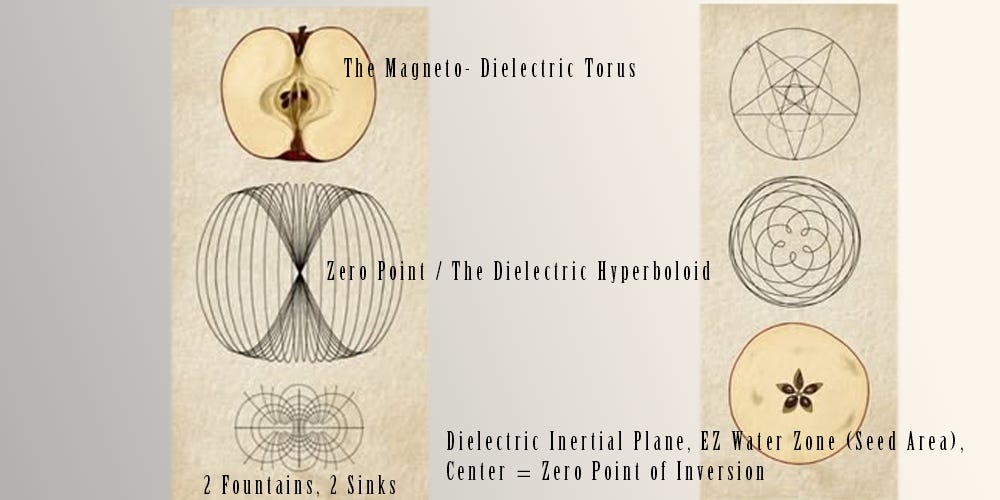
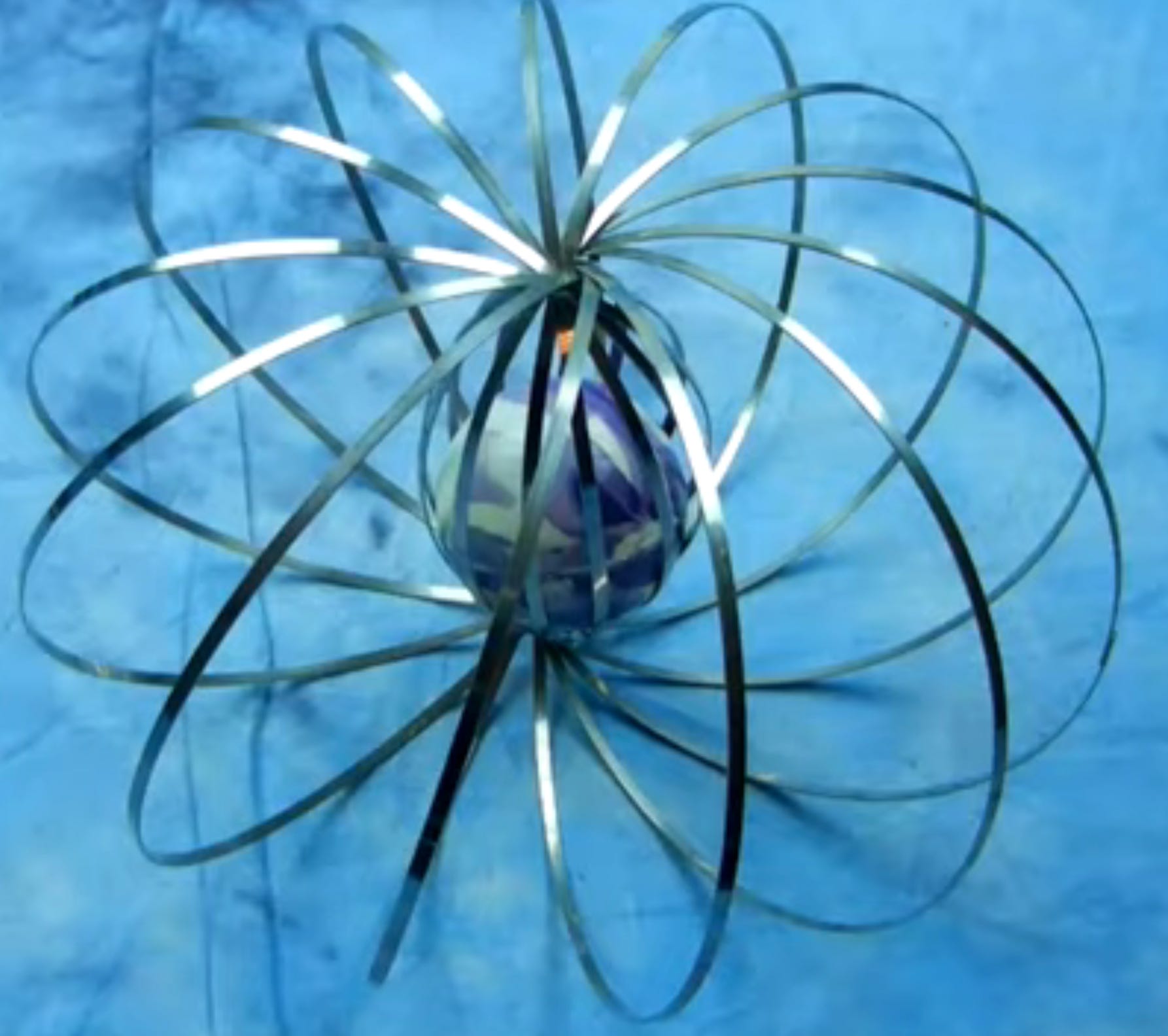
The categorical mistake of seeing the galactic inertial plane as the “flat earth” has brought us into the current situation, where this falsified notion is being revived, in order to delegitimise our truth seeking, by connecting this narrative to all the true deceptions. But it is the inertial plane of the torus that appears at every scale, in apples as much as in galaxies or galactic jets that manifest matter as high energy light in their center. The aetheric medium for that is always water. Light & Water, one cannot be without the other and they are equally irreducible and primal!
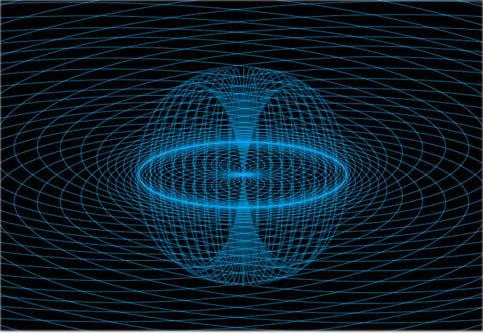
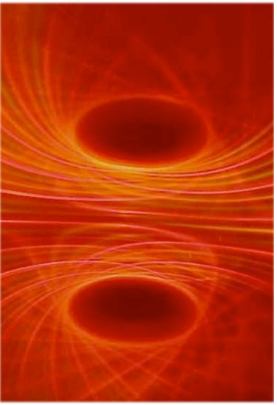
Get to a great video, albeit in the atomistic paradigm, that explains how Light / Electricity / The Torus and its inversion actually works. This video is the only one I have found that shows this correctly: [122]
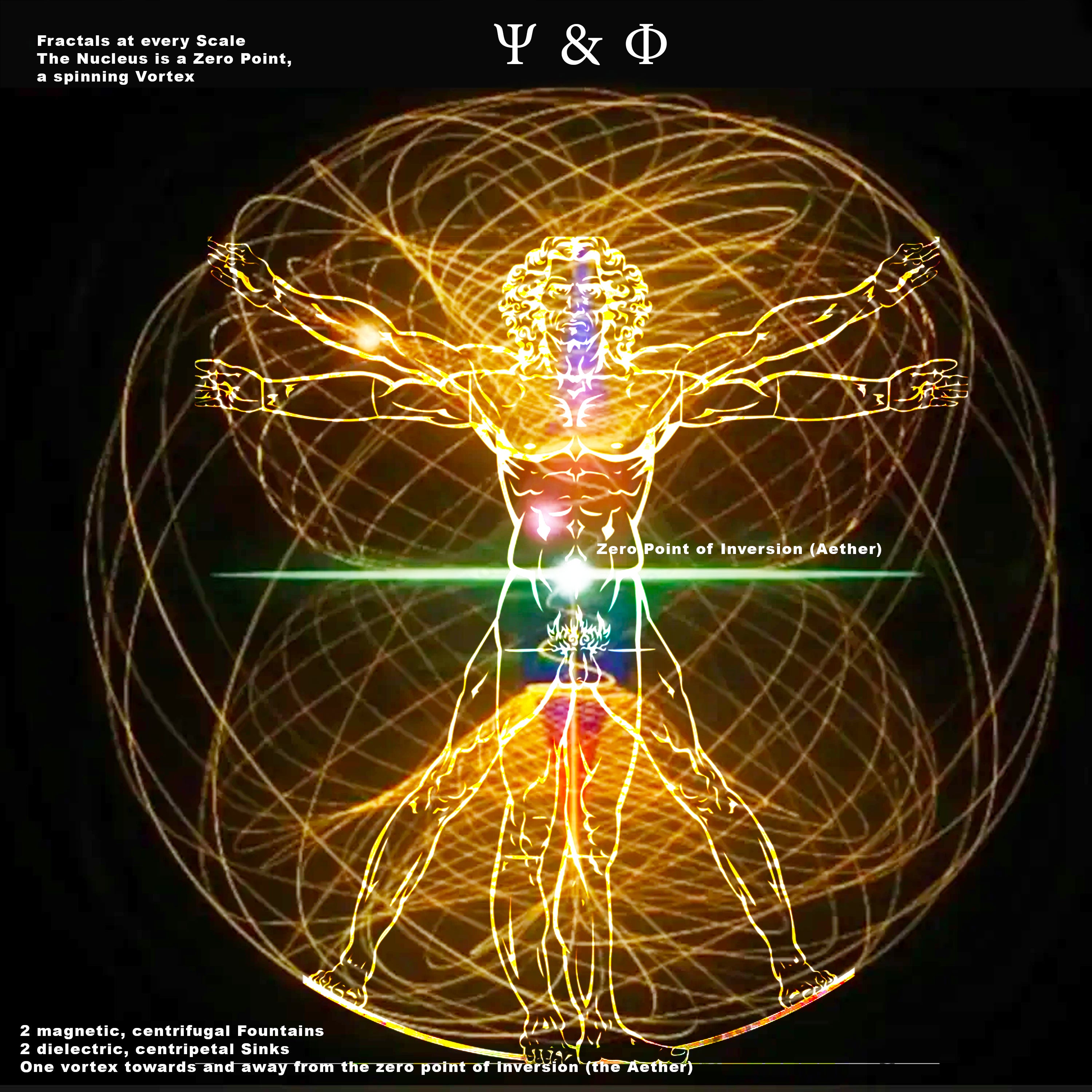

![r/QuotesPorn - "We are now confident that electric and magnetic phenomena are attributable to ether, ...and those of dynamic electricity and electromagnetism effects of ether in motion." - Nikola Tesla [1200x630]](https://substackcdn.com/image/fetch/$s_!oc6W!,f_auto,q_auto:good,fl_progressive:steep/https%3A%2F%2Fsubstack-post-media.s3.amazonaws.com%2Fpublic%2Fimages%2Ffd66be43-85ed-4808-913f-2204ccc9962c_640x336.jpeg "r/QuotesPorn - \"We are now confident that electric and magnetic phenomena are attributable to ether, ...and those of dynamic electricity and electromagnetism effects of ether in motion.\" - Nikola Tesla [1200x630]")
Etymology of the Word “Aether” (connected to the Sky, the Inner Earth & Water)
The word “aether” (also spelled “æther,” “ether,” or “aither”) has deep roots in ancient Indo-European languages, evolving through Greek and Latin before entering English and other modern tongues. Its primary origin is in Ancient Greek, where it denoted concepts of purity, brightness, and the upper heavens.
1. René Descartes (1596–1650)
Descartes described aether as a continuous, fluid substance filling all space (a plenum, rejecting vacuums), composed of subtle matter that swirls in vortices (tourbillons) to explain gravity and planetary motion. He likened the universe to a “sea of swirling matter,” where aether behaves like a fluid conveying forces without direct contact.
In his Principles of Philosophy (1644), he proposed that gravity results from aether’s centrifugal motion in vortices, pushing bodies toward centers like eddies in a fluid. Quote: “The whole universe was a system of interlocking vortices or ‘tourbillons.’ The planets, for instance, are carried around by a sea of aether moving in whirlpool fashion, producing what we would call gravitational effects. → caused by Charge interactions → our Electricity (magneto- dielectric vortices of Light).
Christiaan Huygens (1629–1695)
Huygens viewed aether as a circulating fluid medium for both light waves and gravity, explicitly demonstrating vortex gravity with a water whirlpool experiment. He saw gravity as aether striving to move away from centers, forcing bodies to take its place, akin to fluid dynamics.
In his 1669 writings and Traité de la Lumière (1690), he described a stationary luminiferous aether of elastic particles for light, but a gravitational aether as fluid-like. Quote: “Gravity was nothing more than ‘the action of the aether, which circulates around the centre of the Earth, striving to travel away from the centre, and to force those bodies which do not share its motion to take its place’.”
He used a water whirlpool to simulate how aether vortices create gravitational pull.
By the end of the 19th century, this idea had been refined into the aforementioned “‘luminiferous aether’, an invisible medium through which magneto- dielectric radiation traveled. It was the water for the light’s aetheric perturbations (compressions & rarefactions), and it was the reference frame against which everything could be measured. The aether was everywhere, beyond the zero point in the center of everything.
As you can see, everything falls into place when we identify water as the inversion of light, while both carry an aspect of the other, namely the expansion and contraction of water and the centrifugal and centripetal aspects of light, the magnetic torus and dielectric hyperboloid (the diabolo with the two sticks, meaning the inversion of the torus with the zero point in the center).
We are at a very important turning point here, where water science, physics and ancient myths are reconciled.
Thank you for reading through my work and for being part of the solution. Everything I write is free for you so feel free too to share it openly and wide as long as we can!
Thank You!
your Leon Karmameleon

The connection between Fibonacci numbers (like 8 and 13) and music fits elegantly into both standard Western music theory and the vortex paradigm. In a typical piano octave, there are 13 notes total when counting inclusively from one note to its higher octave (e.g., C to the next C, spanning 12 semitones but 13 pitches).
These break down into 8 white keys (diatonic scale: do-re-mi-fa-sol-la-ti-do) and 5 black keys (pentatonic elements), all Fibonacci numbers that reflect natural growth patterns and the golden ratio (φ ≈ 1.618, the limit of consecutive Fibonacci ratios).
The dominant (5th) note in a scale is also the 8th pitch in this 13-note span, creating harmonic ratios that align with φ.
mathematical irrationality (like √2 or phi, the golden ratio) but a metaphysical attribute enabling beauty, divine proportionality, simplicity, and holographic self-similarity—where “the whole is found complete in the parts, and the parts contain the image of the whole.”
To break it down by key contexts in his work:
Metaphysical and Philosophical Foundations
Incommensurability is the “uncountable/without measure” extrinsic attribute of the Absolute (the transcendent One), which is self-similar and manifests through emanation (as in Neoplatonism and Pythagoreanism). It allows for infinite, fractal-like expression without finite boundaries or dualities—there are “no dualities in nature,” only conjugate aspects operating in unison. Wheeler ties it to the “indefinite dyad” (aoristos dyas), an attribution like light to illumination, where qualities exist projectively without specific locus. This is the foundation of his rejection of materialism, particles, and relativity, emphasizing ether as the infinite medium.
In Magnetism and Fields
Fields (magnetic, dielectric, etc.) exhibit incommensurability because they are present throughout an object or system but have “no actual Cartesian value that can be localized” or specific position—there’s “no location.” For example, in a magnet (a “conjugate magneto-dielectric field system”), polarity is a “mirage” or pressure abstraction without a true locus: “there is no place or location in a bar magnet that contains a north ‘pole’ or a south.” Cutting a magnet doesn’t separate poles but creates two new whole magnets, demonstrating holographic self-similarity—”it’s present all the way throughout, but there’s no location.” The fields are ether-mediated pressure gradients, not emitted from the magnet itself, making them inherently unmeasurable in finite terms.
In Geometry and Proportions
Geometrically, incommensurability involves irrational ratios (phi = 1.618…., √5) that can’t be expressed as simple fractions, forming “perfect harmonic” structures like the Pythagorean pentagram (in triplicate) or triangle. This is the “proportion and ratio of the One to itself,” a “cosmic incommensurability of perfection” and metaphysical mirror of totality. Angles like 85° (equal to the “divine one”), 108°, and 137.5077° (the golden angle) embody this, seen in nature (e.g., sunflower seeds, sand dollars, human nervous systems) as self-similar growth patterns. Wheeler links 360° (circle) to these: 85 × 5³ ≈ 360, derived from ancient knowledge.
Overall, Wheeler uses incommensurability to unify his ether-centric worldview: it’s the key to understanding infinite, non-dual, self-similar reality, rejecting finite measurements or particles in favor of fields and emanations. His ideas are speculative and draw from ancient sources, often presented as revelations overlooked by modern science.
In Ken Wheeler’s theory, “conjugate” refers to the reciprocal, binary pairing (ψ & φ where ψ = 1/φ, the feminine is the inversion of the masculine)) of magnetic and dielectric fields as co-eternal modalities of the Ether in magneto-dielectric light. Magnetism is the spatial, radiative discharge of counterspatial, inertial dielectricity. Light manifests as their unified, oppositional induction, propagating at luminal velocity with radial dielectric and circular magnetic components.
In Walter Russell’s cosmology, decaying matter is not a random or accidental process like biological rot or radioactive breakdown in mainstream science. Instead, it is an essential, deliberate phase in the universal rhythmic cycle- the outbreathing or radiative half of the cosmic heartbeat.
Chthonic / Khthonic Forces:
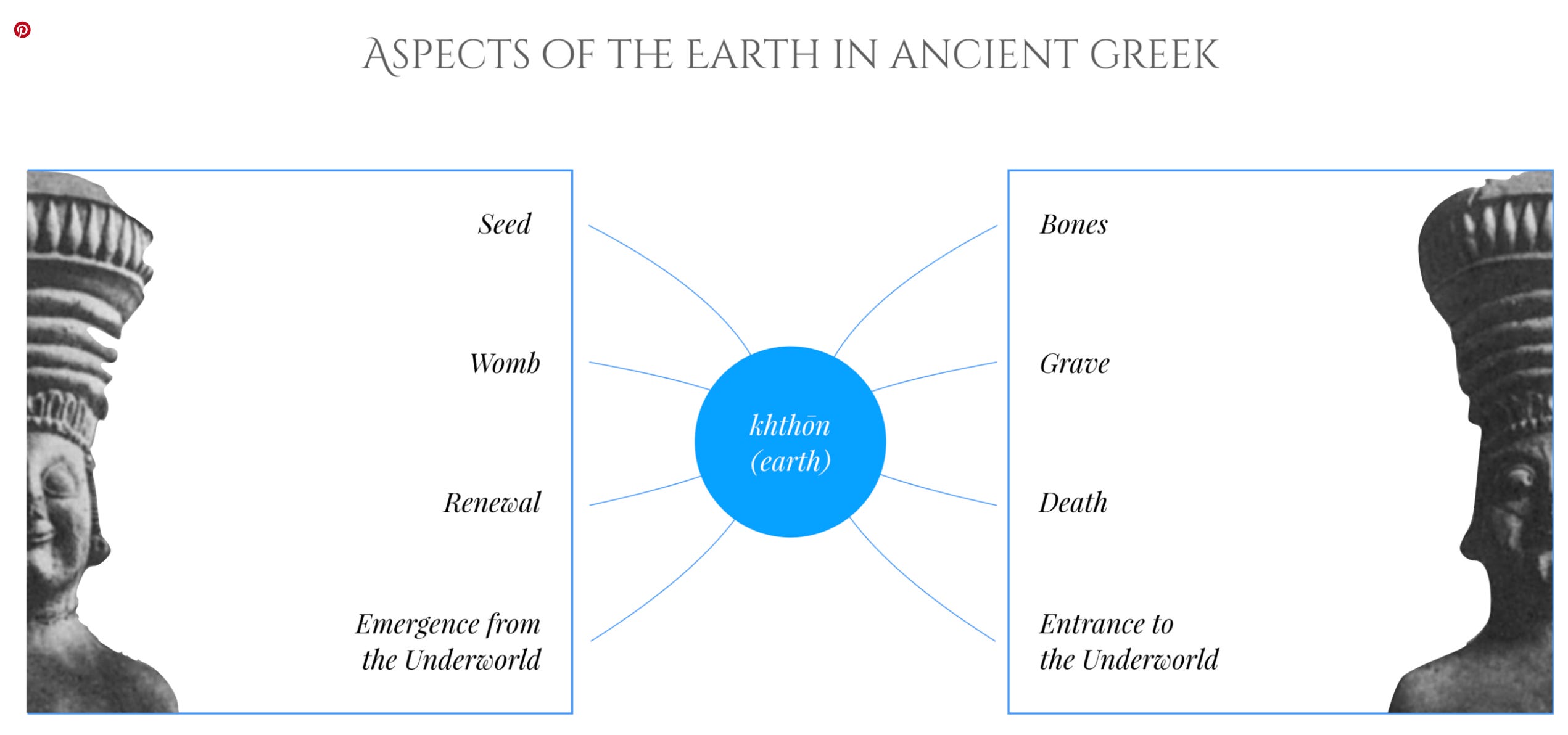
Displaying characteristics of a previous cultural era or of a previous ancestral form; displaying atavism.
Goêteia is a curious word. Partly because of how it is remembered today and partly because of how eager already the Ancient Greeks were to make it irretrievably forgotten.
Mageia, the term that began to replace it from the 6th century BCE onwards is an Iranian loanword and different than goês originally foreign to the Greek language. As Walter Burkert pointed out in his critical 1962 essay ‘ΓΟΗΣ. Zum Griechischen Schamanismus’ the introduction of the terms magos and mageia can be read as a deliberate means to suppress and replace the older, genuinely Greece terms goês and goêtia
The Etymology of the Greek word goês
‘The history of the meaning of a word such as goes leads back to the prehistory of the Greek mind, to a state which overcoming meant the actual beginning of the genuinely Greek.’ (Burkert, 1962, p.55)
This historic context already allows us to deduct a few critical features of the original goêteia. We have learned that the term was pushed into oblivion or re-coined as swearword when the Greek state went through a revolutionary transition: Continuity and stability of the collective order could no longer be maintained through the sovereign power of a single king, but it began to depend on a social contract including everyone in the polis. Thus it was essential that all forms of power were bound into official institutions which could be democratically governed and regulated. The practice of the goes, however, depended on the complete opposite: it required the immediacy and intimacy of personal spiritual experience. Similar to the eruption of a natural force it expressed itself differently through each of its practitioners, but always with complete unpredictability and through spontaneous revelation of the divine.
Thus the officially organised oracles replaced the practice of individual shamans, funeral and death practices were clipped and institutionalised, sobriety and rationalism were held higher than the voices of the dead and ecstasy turned into the enemy of social order (Burkert, 1962, p.54/55).
Now, the etymology of the term goes sheds an important light on why these social dynamics by definition meant that goêteia would need to be abandoned from the place it previously had held in Ancient Greek society.
The root of the word goes can be traced back to the Greek verb γοάω (goáo) which can be translated as ‘groan, bewail‘. This linguistic root not only gives us the first reference to a more original translation of the term goes as ‘incantator‘, but it also points to the a place in Ancient Greek society where it was of primary relevance (Frisk, p.317).
A post-verbal form of γοάω (goáo) is the Greek term góos which can be translated as wail or lament (Frisk, p.317). When looking for textual evidence of it in Ancient Greek literature we find it mainly used in the context of the old funeral rites. Accompanying the dead from the physical to the spiritual realm and from bier to grave is the background from which we first find the root of the word goes emerge. It’s noteworthy that this context alone - the involvement of supporting safe passage from life to death - establishes a parallel to the spiritual being of the ‘psychopomp‘, the Greek word for ‘guide of the souls‘.
Now, the góos in particular had a very specific function to fulfil in the strictly organised funeral and burial process. In particular goos took place during the stage of laying-out the dead body, called prothesis:
‘The prothesis is already presented on Late Mycenaean sarcophagi, and then time and again on the large Geometric grave vessels. Washed and dressed by the woman and with a fillet or wreath wound about his head, the dead man is laid out for viewing in his house, surrounded by the lamenting relatives. The lament, which it is the duty of the woman to perform, is indispensable. It can be bought or it can be coerced. Wailing woman from Caria could still be hired in Plato’s time. (...) The shrill cries are accompanied by tearing of hair, beating of breasts, and scratching of cheeks. The relatives defied themselves: they cut their hair, strew ashes on their heads, and wear filthy, torn clothing. The whole house has fallen from the state of normality.’ (Burkert, 1985, p.192)
As part of these highly ritualised funeral procedures roles of women and men were sharply differentiated. While it was the women’s responsibility to perform the góos, the role of the men was one of praising the dead’s heroic honour, deeds and accomplishments. Even during the actual procession from the house of the deceased to the their place of funeral this difference in ritual roles was maintained:
‘The ritual formality of the men, who enter in procession usually from the right with their right arm raised in a uniform gesture, contrasts sharply with the wild ecstasy of the women who stand around the bier in varying attitudes and postures.’ (Alexiou, p.6)
It is important to call out that such formally organised burial rites represent the output of centuries of development. By the time we find the term góos first mentioned in Greek literature it had already undergone many organic changes and evolutions, both with regards to its meaning and practice.
In fact the term does not appear on its own, but emerges from a background of multiple funeral related terms. The following image provides a brief overview of the many words that equally took their formal place in the Greek funeral rites and experienced further definition and articulation over time:
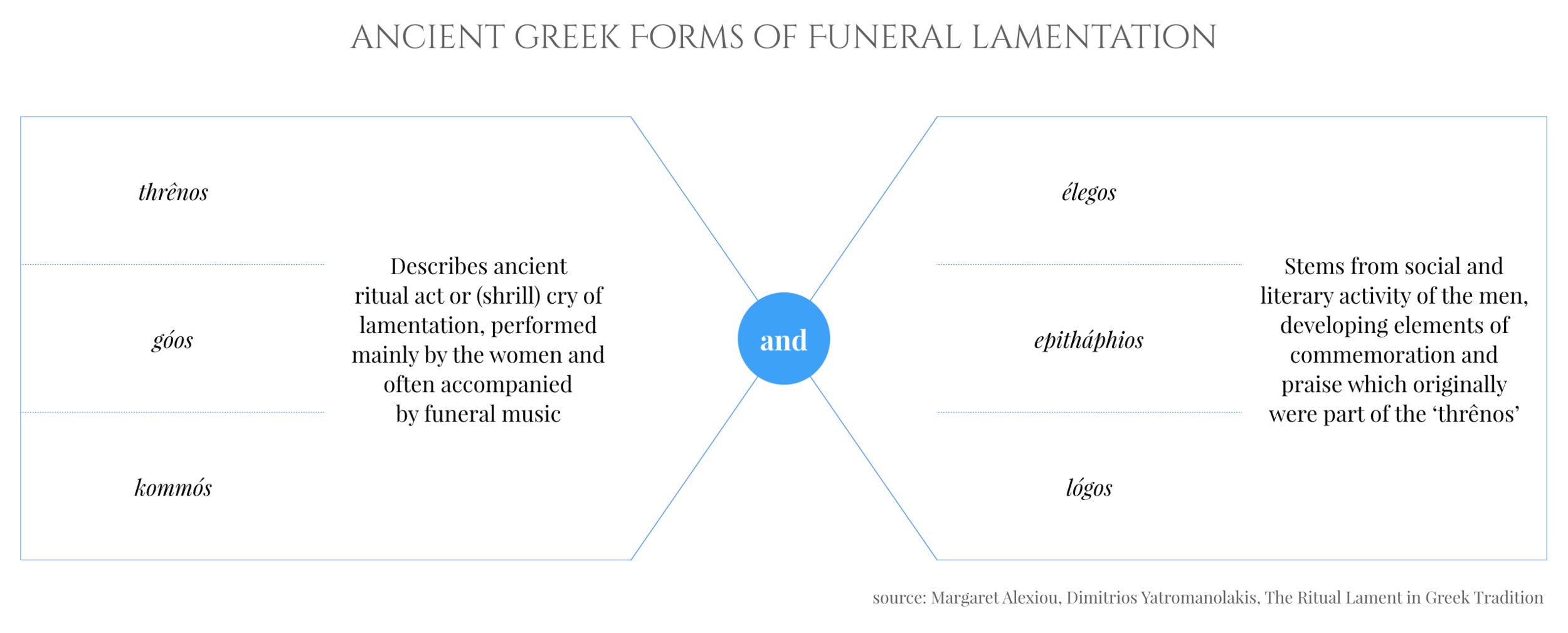
Thrênos and góos are both words of ancient Indo-European origin, referring to a shrill cry. However, over time it was the latter that was clearly associated with the spontaneous, unrestrained and highly individualised ecstatic performance of the women. Thrênos on the other hand began to be used for the set dirge of the man, often accompanied by music, solemn and calm in tone, composed and rhetorically polished in performance (Alexiou, p.102/103).
In their late, fully formed meaning the two terms then were clearly distinguished: as still captured in the English word threnody, the thrênos signified the poetically performed appellation to the bereaved to remember the deceased in good spirit and in light of their good deeds. The góos instead was aimed in the opposite direction, not towards the living but towards the dead. It signified a temporary bridge established between the living and the dead (Burkert, p.44), conjured up by expert practitioners, over which they led the soul of the deceased into the chthonic realm.
Critically, however, the term góos was not only used to describe a particular spiritual (burial) practice, but more importantly to describe the actual experience it induced in the living who observed such performance.
Earlier on we discovered some of the socio-political reasons that led to the suppression of the term göês in the fifth century BCE. Uncovering the linguistic root of the word has led us to a striking continuation in the experience associated with both terms: a spontaneous, uncontrollable, ecstatic practice, loosely framed by ritual structure, aimed at the realm of the dead, and deeply disrupting to the social sense of normality and order.
The famous scholar of religions Rudolf Otto (1896-1937) in his magnum opus ‘Das Heilige‘ (The Sacred) coined the twin terms of ‘mysterium tremendum’ and ‘mysterium fascinosum‘ (Otto, p.13ff). The former describing the experience of the sacred inducing fear and tremor; the latter signifying the opposite experience: the mystical secret whose experience led to delight and rapture.
Beginning already in the 5th century BCE, continuing over centuries and resurfacing again during the pagan revival of the Renaissance in the 15th century, Western thinkers and philosophers stylised a badly biased and one-sided view of our pagan past: that the ancient gods themselves just as much as their genuine experience by humans stood for ‘vitality, beauty and lucidity’ (Snell, p.41). By definition the more pleasing and appealing experience of the mysterium fascinosum became the sole indicator of a mystical experience and ultimately of a genuine state of gnosis.
In this sense the göês truly represents a shadow suppressed in our collective memory: their person was the prime example of the kind of direct experience of the divine which resulted in tremor and fear, not in rapture and delight. When Bruno Snell in his seminal book ‘The Discovery of the Mind’ postulated the Greek had unlearned to be afraid, he really sang praise to the domestication of the divine and to the successful suppression of the ars goetia.
‘A foe of the intellect who wishes to cite Greek views in corroboration of his stand must base himself upon the gloomy concepts of chthonic powers; he may point to some cult celebrated with ecstatic abandon; but he may not call to witness the great works of the Greek genius (...)’ (Snell, 39)
As Burkert pointed out, this context leads us to the most likely, literal translation of the word goes. Instead of translating it as ‘the one wailing for the dead’, he suggests for it to be read as ‘the one conjuring the dead’.
Thus, while connected to it by its linguistic root, the art of the goês can not be misunderstood as a professional lamenter at funeral processions. Instead the goês was an expert practitioner of the chthonic cults, a spirit guide taking possession of souls whose magical incantations and celebration of the mysteries were not polished and elaborate but instead ecstasy, fear and tremor inducing and which left them acquiesced rather than embraced on the fringes of the communities they still served (Burkert, 1962, p.39/44).
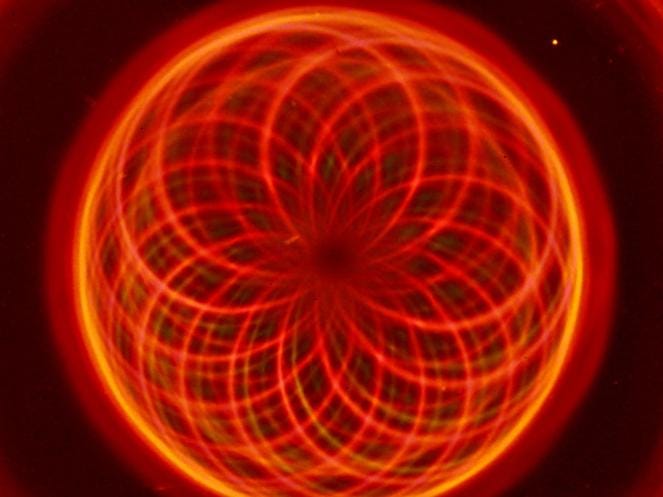
Example of real magneto- dielectric field lines under the Ferrocell (Ken Wheeler):
I truly love your work Leon. I have slowly been contemplating your insights and discoveries for some months. It's fascinating. I am uncomfortable with accepting Sophia and Lucifer's connection, but I understand your arguments. It may take me a while to digest that. I love the connections you make to EZ water, electrome and Michael Levin, or Ken Wheeler. It will take me some time to grasp it. I think you are right about the psi and phi, the inverse relation.... I have a feel for it at the moment, not an understanding yet. Chinese medicine talks about 5 elements, each comprising a yin-yang pair or organs, e.g. Metal (Air) is related to lungs and large intestine. So, this would lead to 10 basic meridians (neuro-fasia-muscular pathways). There are, however, 12 basic meridians (and many others, non-basic) related to 12 organs. Two of the organs are the pericardium (heart protector) and San Jiao (also called Triple warmer). San Jiao is a "mystical one" - it does not have a form. In fact, it is merely everything that it is not. What I mean by that is the cavity, the space, the emptiness or the within that allows other key organs to function and communicate. We talk about three jiao's (san=three) containers, such as upper jiao, middle jiaa and lower jiao. Each jiao is roughly a space that holds organs and provides for their function. It is more than the space because it is about the biological communication that happens in between. Practically, one of the aspects is the lymph flow. The other could be biological signalling. Upper jiao contains heart and lungs, middle jiao - what's below the diaphragm & from the navel up (roughly), and the lower jiao - what's below the navel. In recent years, Slate Burris (who developed a new form of acupuncture) dug deeply into old Chinese books. He found out that there were 6 elements, the 6th being Aether. Around XIII century, the Chinese scholars decided to hide Aether from plain view; they removed it from the teachings. Since the medicine was being taught verbally and through observation, from a master to a disciple, old knowledge was mostly gone. So, there are simultaneously 5 and 6 elements. The point is that one of the elements, Earth (as Reality), contains the basic four: Fire and Water (the first yin-yang pair) and Metal (Air) and Wood (Nature or Earth as Nature/Gaia) (the second yin-yang pair). Earth (=Reality) contains them all. So, you have the primordial yin-yang expression, Aether vs Earth, which you call Aether vs Reality. And then, in Chinese medicine, we have two other yin-yang pairs where the Earth encompasses them, is their "Space". It is Fire-Water, Metal-Wood. You say that the basic duality is magnetic vs dielectric. Perhaps it is electromagnetic vs dielectric. And then Fire-water is electricity vs magnetism. What is metal-wood? Hmmm... I am not sure. It describes the basic relationship between the lungs and liver, and we can think of it in terms of time: past vs. present. It is the past (liver, processing the past, emotions) and the present moment (lungs, breath). Perhaps is the very axis of time that the double torus spiral is being created .....and the talk of ken Wheeler. Thanks again for all your writing.
An utterly fascinating read! So much covered yet... So easy to grasp! Thank You!!!