The Electrome

» Go directly to the first article «
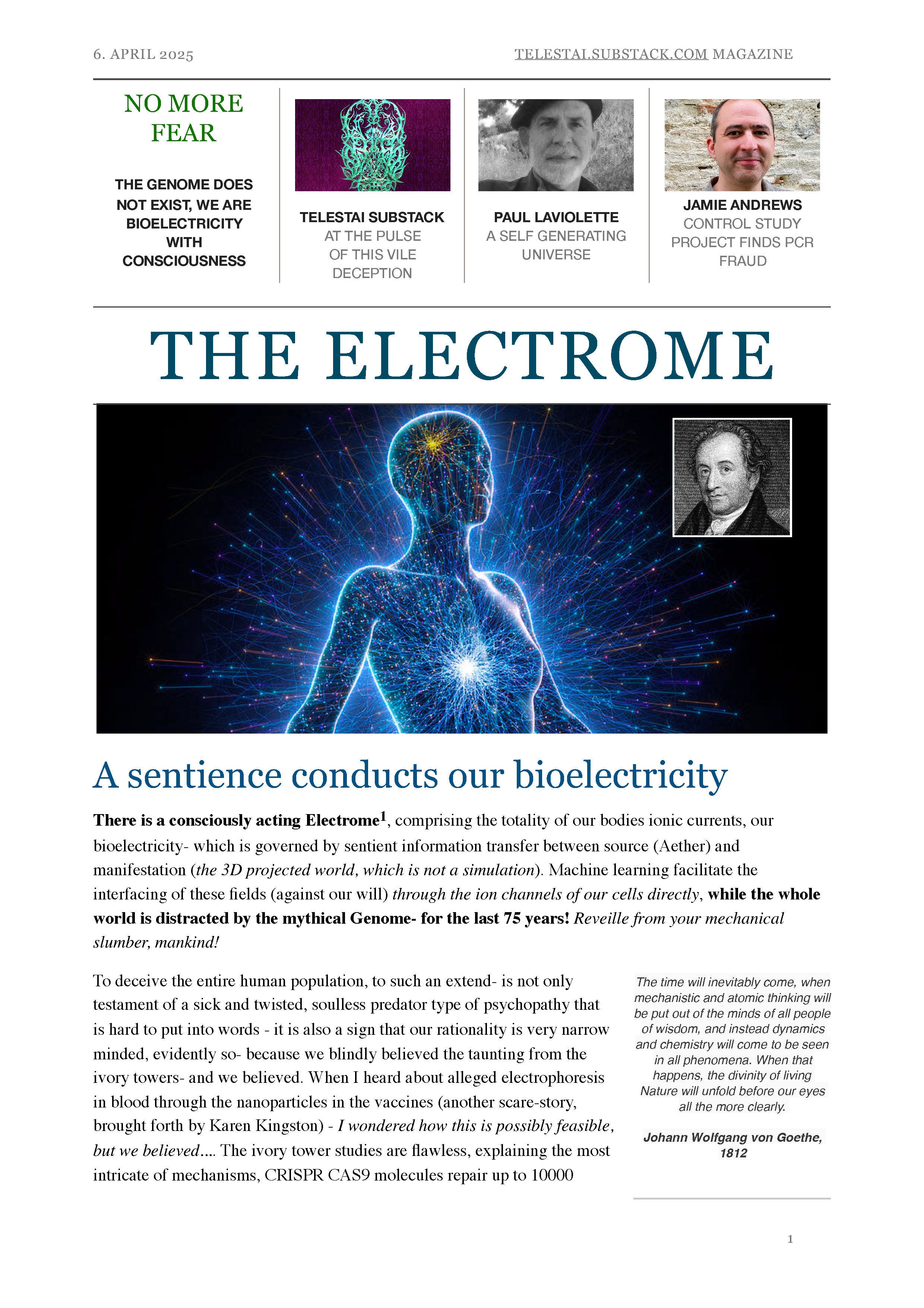


What if the entirety of Genetics is an obfuscating Cover Up for Bioelectricity- the all encompassing Electrome of Life? (I)

There is a consciously acting Electrome, comprising the totality of our bodies ionic currents, our bioelectricity- which is governed by sentient information transfer between source (Aether) and manifestation (the 3D projected world, which is not a simulation

Free from Genetic Code & the Duality of Death in a World of Cyphers (III)

The Era of Secrecy is Over.
Why did they lie about Genetics? Hacking the Electrome (Your Biofield + Awareness, your Soul?) (IV)

"Every scientific book in the world is disinformation" Dr. Paul LaViolette
Mystery Solved! The Bill Gates "Trade-Secret" Qdot (LNP) Patent shows Charge Fluorescence for "Genetic" Sequencing: They are mapping, reading and writing our Voltage Language, not Genetic Code! (V)

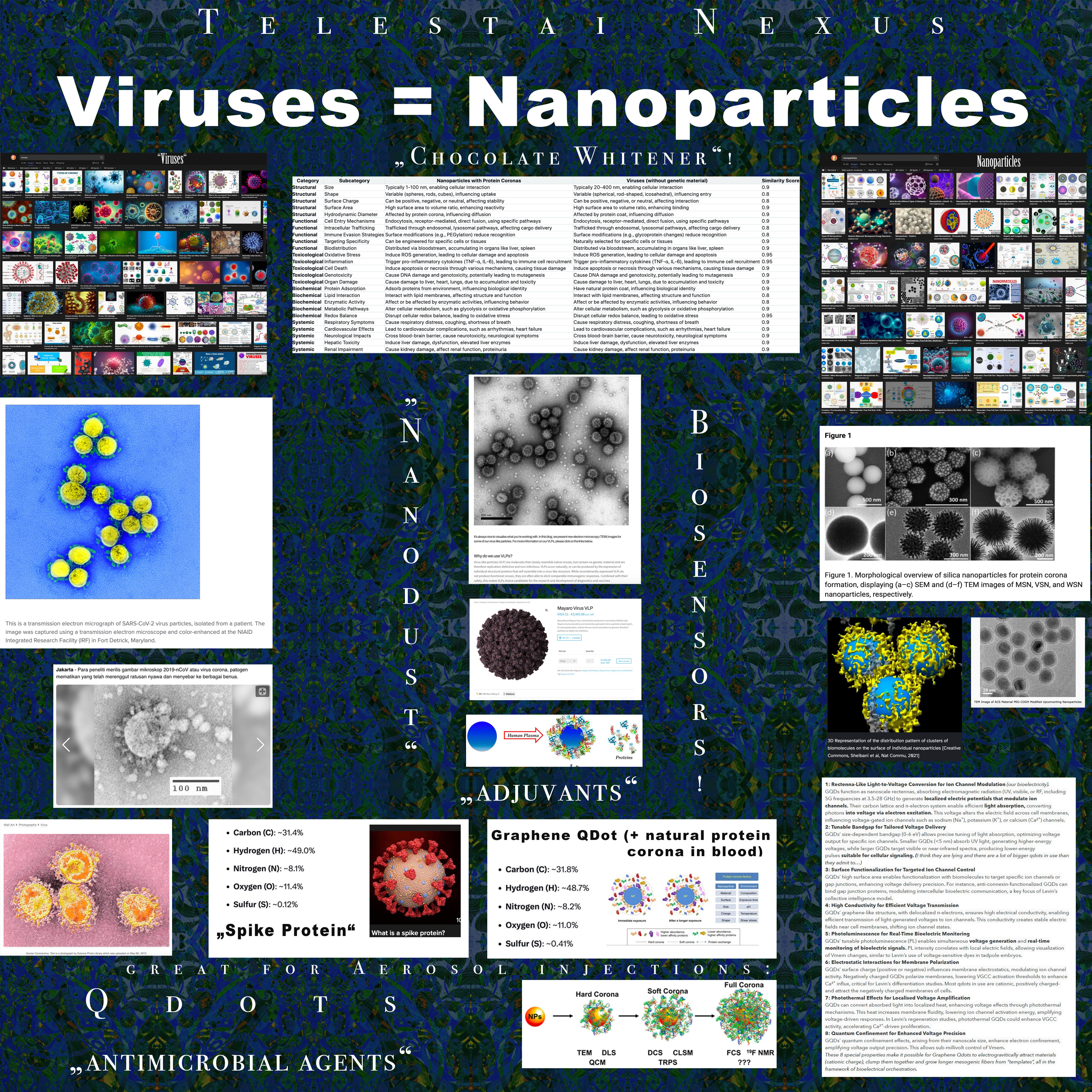
Let’s get straight to it: Qdots were meant for “genetic” sequencing (besides their presence in medications, as adjuvants, as LNP in the shots, in “antiviral” aerosol injections etc.). They are voltage sensitive. The patent explicitly states their presence in mixtures of oligonucleotides for
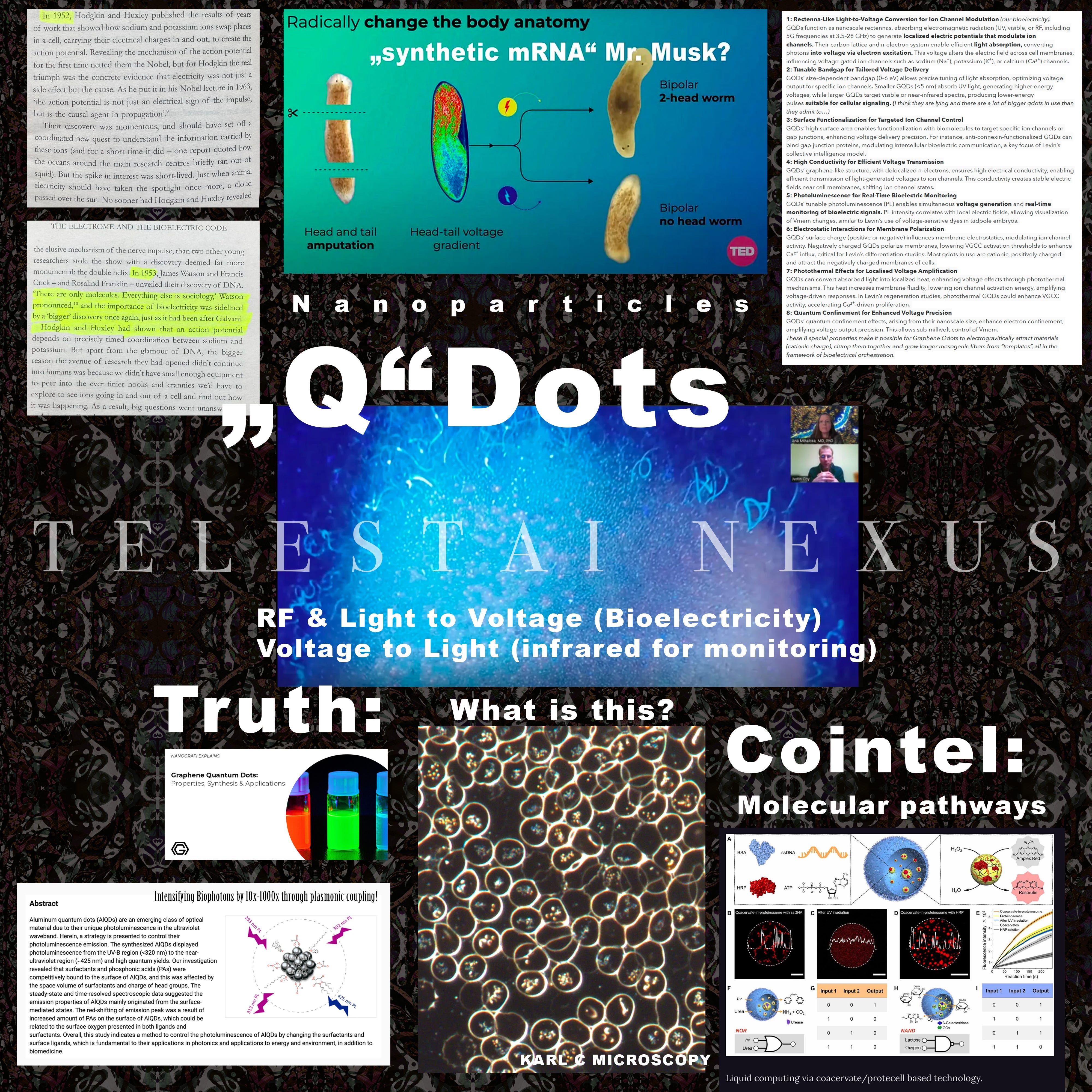
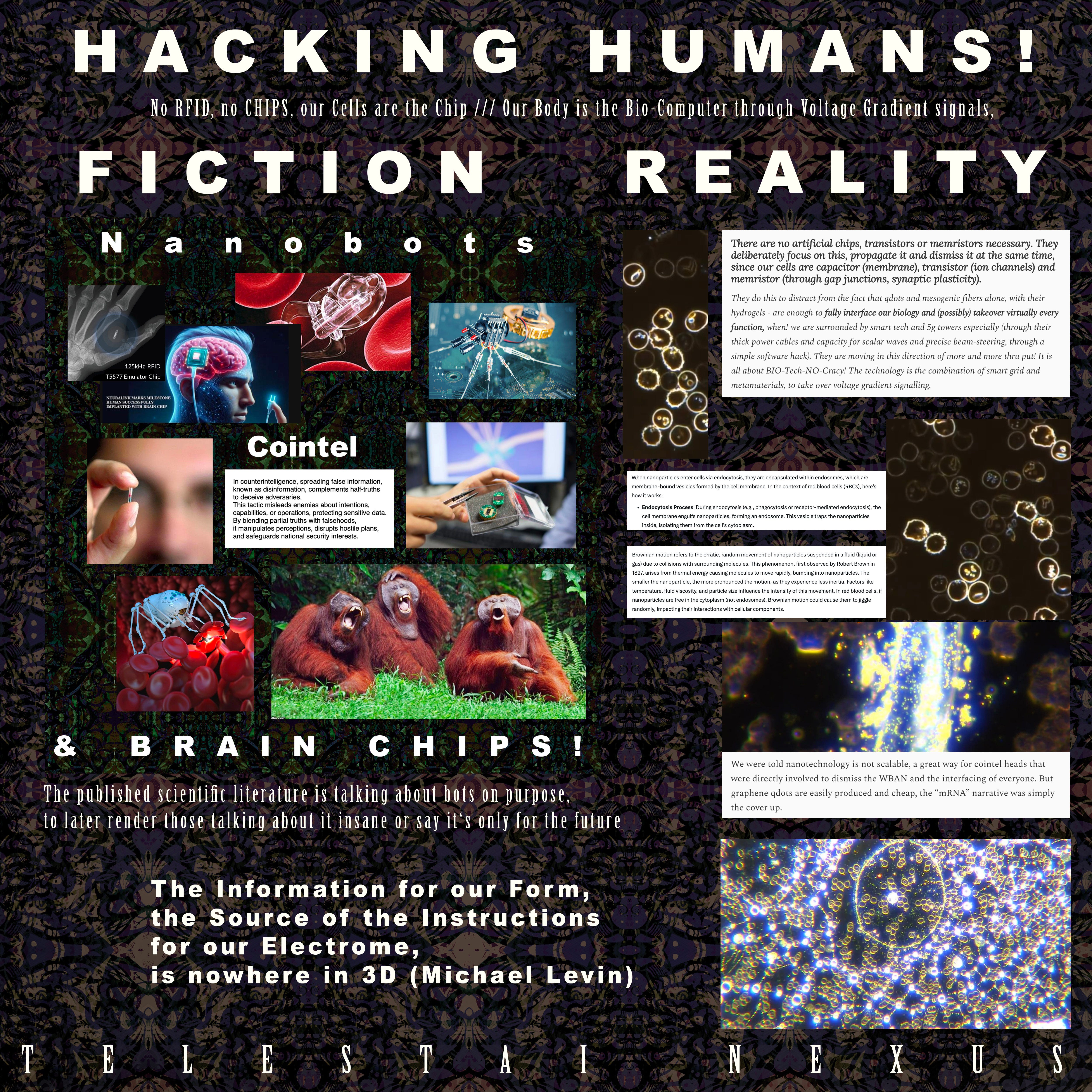
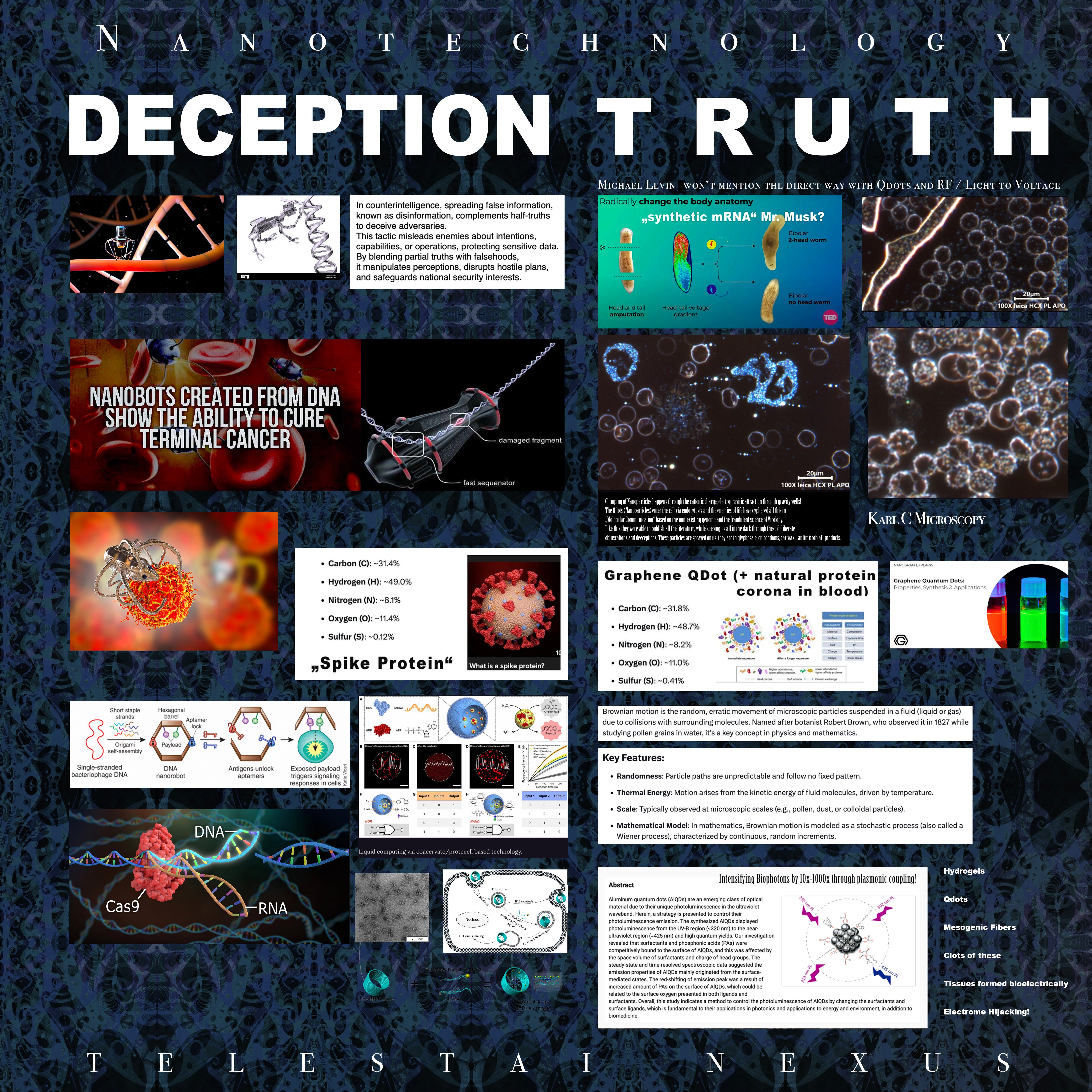
Plants, Fungi, Animals: Everything is Conscious! What does "Organic" mean, when Voltage Signals, not "genes", change Electromes? ::: "GMO" is a Vile Cypher for Voltage Necromancy!

We are more than the sum of our parts, emergence is not just something that can be reduced to physical light / electricity- even subquantum kinetics…

The Kybalion & KA - Qi - Orgone: Life Force! ::: Our BioField ::: Force of Will vs. A.I. Necromancy

First of all, I would like to give everyone the chance (thanks to alchemical science) to download this very unique Document, once exclusively for the powers that shall not be, a kind of counterpoint to the immersion in Eros and Planetary Tantra! A deep dive into the true

8. Where is your BioField? (featuring Sabrina Wallace)

Progressive Reality Music /// Consider this piece of music part of our future commons!